
From Research to Venture
Can you introduce yourself in 2–3 sentences?
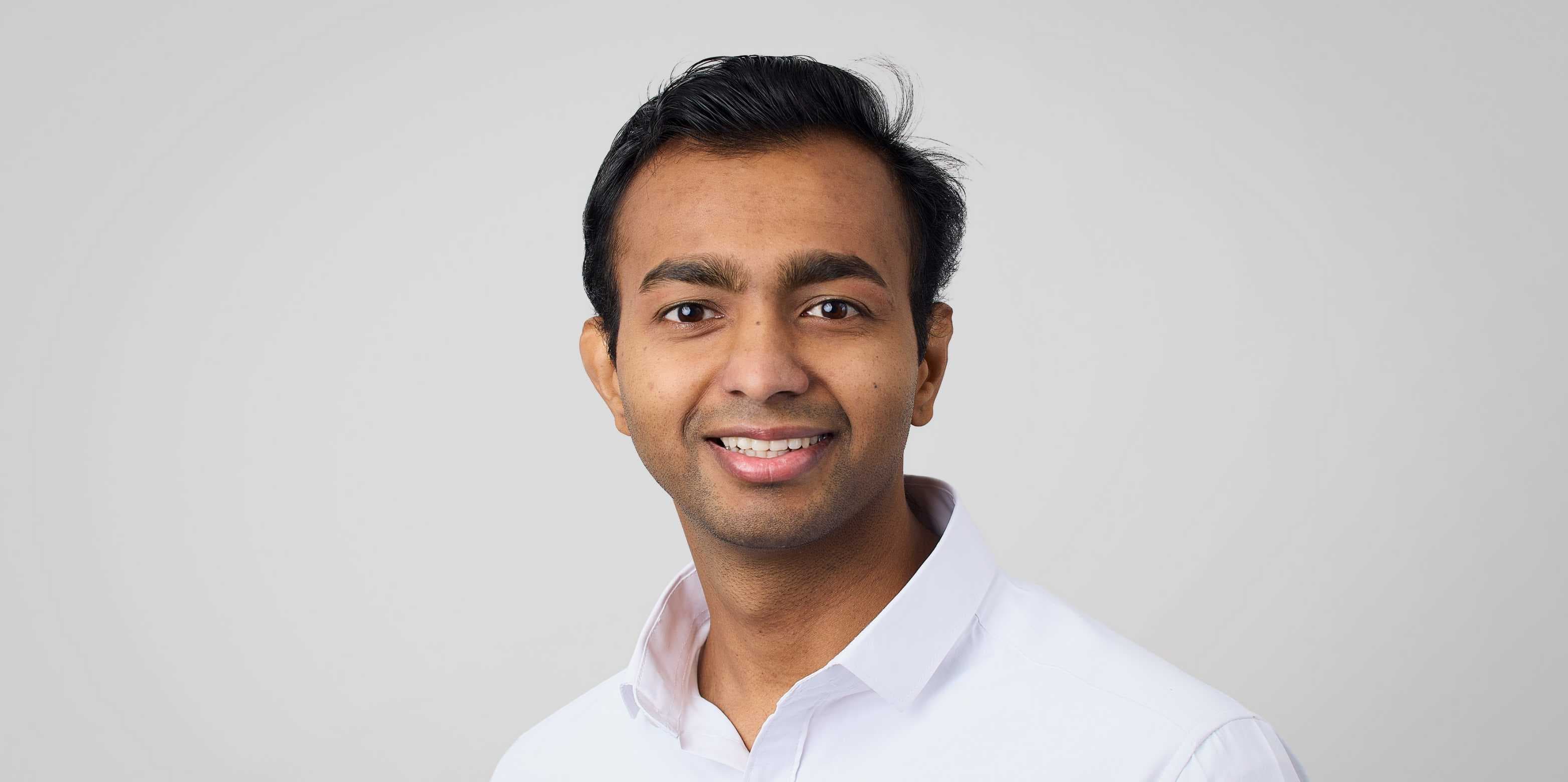
I am Mayur Sapkal, a researcher at ETH Zürich’s Institute for Atmospheric and Climate Science, and the project lead of RepliClouds. RepliClouds is a deep-tech venture I am currently developing as an ETH Social Impact Pioneer Fellow, with the goal of turning it into an ETH spin-off. My PhD in cloud physics was centered on building a new scientific instrument, the HCCNC, that can replicate natural cloud formation under conditions no existing device can reach. The Pioneer Fellowship is the bridge that allows me to translate my lab prototype into a deployable solution, ensuring that the technology reaches the researchers who need it most.
How long have you been working in your specific field of research?
About six years in total. I hold a master’s degree in atmospheric science from India and just recently completed my PhD at ETH in April 2026. The hands-on instrument work on the HCCNC specifically started in 2021 when I joined Dr. Zamin Kanji in the Atmospheric Physics group, so roughly four and a half years of building, testing, and refining. Before atmospheric science, I spent a couple of years as a mechanical and production engineer in industry, which shaped how I approach problems as much as the research did.
What & when was the moment you realised this was a potential company?
The moment it became real was the day our scientific paper about the HCCNC was published. That same day, we received a message from the founder of the leading company in the field, the company whose instrument holds a monopoly in this space, asking about the licensing status of our device and its current development stage. At the same time, researchers from other groups were already reaching out, expressing interest in having the instrument for their own work. Up until that point, we knew we had something scientifically compelling, but that day confirmed it could become something even bigger. There was already a market pulling us forward before we had even begun thinking seriously about a company. When the person who dominates your field comes to you asking about licensing on the day your paper goes live, that is a signal you do not ignore.
What were the first steps you took after your realisation?
Interestingly, the first concrete step came before the realisation. We had already filed the patent application before the paper was published, which turned out to be exactly the right instinct. The process teaches you to protect the technology before you expose it to the world. Because we had taken that step in advance, when the paper was published and the response unfolded the way it did, we were already positioned. The patent gave us the foundation to think seriously about what commercialisation could look like. So, in a sense, the first step and the realisation arrived in the wrong order. The step came first, and the realisation confirmed we had been right to take it.
Did you ever imagine being a founder/CEO of a company before that moment?
Not in those words, but in hindsight the instinct was always there. I spent a couple of years in industry before my PhD. I was a senior production engineer running two contractor teams, twelve people in total, building and testing pollution-control equipment, and then in operations at Svami, a fast-growing Indian drinks brand. I was always drawn to the question of how things get made and how they reach people. When I started my PhD, I was genuinely frustrated by how often state-of-the-art instruments developed in academic labs never made it outside those labs. ‘Founder’ did not feel like a word that applied to someone like me at the time, but the frustration was already pointing in that direction.
Receiving the Pioneer Fellowship: Walk us through that moment.
What people might not realise is that I actually applied for three different fellowships for this same project: the Deep Tech Pioneer Fellowship, the Social Impact Pioneer Fellowship, and the Innosuisse BRIDGE Proof of Concept grant. All three applications were accepted in the first stage. But there was a complication: for the second-stage interviews, I had to be in India for personal and health-related reasons, which I had declared in advance.
For the Deep Tech Pioneer interview, I requested an online format. The internet failed in the middle of the interview, and I got kicked out of the call. That was genuinely difficult to accept. For the Social Impact Pioneer interview, I decided to travel to another city in India where I knew the connection would hold, and that one went well. The committee asked their questions, and I gave my best answers.
Then came the wait. I was still in India when the results came through, late at night, just two days before I was due to fly back to Zürich. Professor Ulrike Lohmann (one of my supervisors) was the one who texted me to share the news that I received the Social Impact Pioneer Fellowship. I read her message and could barely believe it.
I told my partner right after, and her reaction was tears of joy. Her family was with us in India at the time, and they were just as happy , proud and quietly wishing me good luck for what came next. Shortly after, my supervisor Zamin Kanji wrote me a similar message of support. It was a moment of joy and tears and exhaustion, all at once. Months of preparation, finally landing where I had hoped it would.
What CoLab Made Concrete
You were part of the first edition of CoLab. How did you learn about it, and what was your experience?
I learned about CoLab almost by chance, during an information event at ETH about fellowships for spin-offs and start-ups. The session was mostly about the Pioneer Fellowship and how the Swiss innovation infrastructure helps researchers to transition from research to entrepreneurship. There was just one slide, half a slide really, that was about CoLab. This was my first glimpse. A little later, my supervisor forwarded me an email about the programme, and I decided to sign up.
CoLab felt different from the start: it was not a one-off lecture; it was a structured programme with mentors who had real start-up experience and a final pitch to a jury. Personally, it was the programme that gave me a first glimpse of the vocabulary and practical tools I needed.
Can you describe CoLab’s mission as you experienced it? To whom would you recommend it?
As I experienced it, CoLab’s mission is to close the gap between the moment a researcher thinks ‘this might be more than a paper’ and the moment they take the first concrete step. That gap is enormous in academia, not because researchers cannot build companies, but because nobody teaches you the transition. CoLab is a relatively short programme that gives a first real glance of that landscape, at least the steps you might need to take. I would recommend it to any student, PhD, or postdoc who has a nagging feeling that their work has real-world impact, and who wants to test that feeling in a structured, low-pressure environment before committing to anything larger.
How exactly did CoLab help you on your way?
One of the most important sessions for me was the IP workshop run by Dr. Paul Peyrot. I already had some awareness of intellectual property beforehand, but the workshop gave me a deeper understanding of what we had developed, why it could be protectable, and most importantly, the confidence to walk into my supervisor’s office and say: we need to file a patent. That conversation, the information and confidence behind it, came directly from that CoLab workshop.
How did you make the transition to ‘thinking like a founder’? Any academic habits you had to set aside?
I just finished my PhD, so I'm not sure that I can already say that I am away from academia yet. But yes, while preparing for the Pioneer fellowship, I had to think of myself as a founder already. The academic habit I had to work hardest to set aside was the instinct to optimize the technology in isolation. In research, you naturally focus entirely on the core data and the next scientific paper. While the science behind our instrument is fully validated and peer-reviewed, transitioning to a founder mindset meant stepping out of the lab earlier than a typical scientist would. I had to shift from purely refining the specs to actively learning about user workflows, ergonomics, market research, who will use our technology and how other researchers would actually interact with the tool in their own labs.
But honestly, what really shifted my thinking was not just a change in habits but a change in purpose. Through market research and by comparing our device with existing technologies, I started seeing how much more flexibility, innovation, and new openings our instrument could offer. I saw new ways to study clouds and understand our atmosphere. The more I thought about that, the more the question shifted from ‘is this good science?’ to ‘how does this actually help people?’.
That is where the urge to step beyond pure research came from. It was the idea of making this device accessible to communities, not only to other researchers, but also to the farmers in India, communities in the Swiss Alps and people whose decisions about water and crops and livelihoods depend on better climate data. For me, thinking like a founder came down to one question: can we make this device available to everyone who could use it? That question is what tipped me from the pure-science path toward this one.
How long did that transition from research-only to a specific business idea take?
It took a good amount of time, honestly. The journey started right at the beginning of my PhD in 2021, when we identified specific limitations in the one device available on the market, which was not able to serve our purpose, which is one of the processes the natural cloud droplet forms and asked ourselves: what if we could build something that truly replicates natural cloud droplet formation conditions? That was the original scientific goal.
I started from scratch. I designed the device using computational fluid dynamics software, ran simulations on different geometries, and went through 17 or 18 different designs before we settled on one. Even then, together with my two co-inventors, Zamin and Michael, we reached a bottleneck. The design had become complex enough that conventional manufacturing wouldn’t work cleanly, so we moved to 3D printing. We validated the science, dealt with the inevitable bottlenecks, and got to a working prototype.
Somewhere along the way, my perspective on the project began to change. I realised that the problem we were trying to solve, namely replicating natural cloud droplet formation for our own scientific work, was actually the same challenge many other researchers in the field were facing. They also needed a better instrument to understand cloud formation, and through that, gain a better understanding of the climate. There was a broader research need and ultimately a community need behind it.
That realisation drove the next phase: deciding to file a patent, writing the application, speaking with industry partners, connecting with other researchers, convincing my supervisors to support this direction, applying for the fellowship, and doing the market research. It has been a long journey, much of it happening behind the scenes. Very little of it is visible in my scientific publication record, where I currently only have one published paper from this work and another one in the pipeline. But that is the truth of building something that aims to reach the community: most of the work does not make it into the journals.
How does the Pioneer Fellowship / ETH ecosystem specifically help you?
The Pioneer Fellowship does three things I could not replicate on my own. First, it provides time: a dedicated 18-month period to focus entirely on the transition from prototype to potential product, without the pull of other academic obligations. Second, it provides structure through coaching: regular check-ins that force you to clearly articulate where you are and what is blocking you. That process itself turns out to be a form of progress. Third, it provides legitimacy: when I approach a potential customer or partner as an ETH Pioneer Fellow, it opens doors that a cold email simply cannot. That kind of experienced outside perspective, someone who has seen companies built and fail and built again, is something the ETH ecosystem makes accessible in a way most academic environments do not.
One of CoLab’s ambitions is to encourage more researchers to start companies. How can this be improved?
The barrier is rarely motivation. Most researchers would love to see their work create real-world impact. The barrier is visibility: not knowing that the path exists and not seeing examples of people like themselves who have already taken it. Events like CoLab help address this, but I think even earlier exposure matters. Short sessions embedded in PhD programmes showing what the commercialisation path actually looks like in practice, including the slow starts and the dead ends, not just the success stories. There should also be more frank conversations about what a spin-off looks like three years in, not just at the fundraising announcement. And there should be more examples of non-stereotypical founders: not just the computer science dropout building an app, but also the atmospheric physicist building a measurement instrument. The diversity of example people see is probably the most powerful lever available.
Building RepliClouds
For how long have you been working on the prototype?
The HCCNC development started in earnest in 2021, when I joined the Atmospheric Physics group at ETH. So roughly four years of instrument development, from the initial CAD design through fabrication and multiple testing iterations to the validated paper published in Atmospheric Measurement Techniques in 2025. The device I am developing now through the Pioneer Fellowship, the commercial MVP, is a redesigned, more compact, and modular version of that prototype. In a sense, it is both brand new and years in the making.
Where does the project stand right now? Lab or business side?
Right now, RepliClouds is a deep-tech venture, but not yet an incorporated entity. The transition is planned for during and after the fellowship period, once the device reaches a deployable state. Within the project, however, the balance has genuinely shifted. I still spend time on the technical side, refining the device and making it more robust for real-world use. But the business development side increasingly dominates the calendar: customer conversations, partnership discussions, the Pioneer Fellowship coaching programme, and meeting future users at conferences. I just recently returned from EGU 2026, where I introduced the HCCNC to the research community and showcased its unique capabilities through a presentation and a flyer. I would estimate roughly 50% technical and 50% commercial at the moment, and that ratio is moving further toward commercial as the fellowship progresses. That shift is by design — it is what the fellowship bridge is built for.
Can you elaborate on your experience with the patent application process at ETH?
The IP process at ETH was more accessible and manageable than I initially expected, although the learning curve was significant. Working with ETH Transfer, drafting claims and responding to the European Patent Office’s extended search report were all entirely new experiences for me. Dr. Ying Wang at ETH Transfer was incredibly helpful throughout every stage of the application.
The first hurdle was demonstrating to ETH Transfer that the idea had genuine commercial merit. In some sense, they became the first investor in the intellectual property, so I had to conduct market research and present a clear commercial case. As lead inventor, I prepared the initial draft of the patent, including figures. The co-inventors then reviewed it and provided feedback, which I incorporated before submitting it to ETH Transfer.
Afterwards, the patent attorney translated it into formal patent language, which was another entirely new process for me. One important note for every researcher is that writing a patent is not the same as writing a scientific paper. In a paper, you talk about the science. In a patent, you talk about the technology: how it works, how it differs from older technology, and why the invention is genuinely new. That distinction took me a while to internalise.
The most important practical advice I would give is simple: get in touch with ETH Transfer as early as possible, and please do not publish a scientific paper about your invention before filing the patent. That is a one-way street.
What are the next big steps for RepliClouds?
Three things need to happen simultaneously over the next year. The first is technical: transforming the instrument from a working research prototype to a robust, field-ready product. The second is engagement: continuing to build relationships with researchers, agencies and institutions that have already shown interest in the device and converting that interest into concrete deployments. The third is people: finding the right technical co-founder to share the building work. By the end of the fellowship, the goal is to have all three elements in place, so that the venture can transition into an incorporated ETH spin-off that is truly ready to deliver what the field has been waiting for.
Are you operating independently, with a team, or still part of a wider research group?
RepliClouds is currently a deep tech venture in a transitional phase, somewhere between a scientific research project and an early-stage spin-off. On the technical side, I work alongside my PhD supervisor, and one of my close colleagues with strong engineering expertise also advises me when needed. On the commercialisation side, I work largely on my own by reaching out to potential users, gathering insights about what researchers actually need and introducing the device and its capabilities to future users.
I also continue to use the infrastructure of the Atmospheric Physics group, where I remain a member, learning something new every day. So in a way, I am both within the group and leading RepliClouds independently, supported by senior researchers and business guidance from Alfred Schorno. At the same time, I am also actively building new skills: I am currently taking an entrepreneurship-focused course covering fundraising, marketing, equity structures, and the other practical aspects of running a venture that a science training does not cover.
Are you seeking co-founders or team members? What qualities are you looking for?
Actively. The profile is quite specific: someone with hands-on instrumentation and mechanical or electronics engineering experience (mechatronics is a plus), ideally with skills in software for embedded systems or laboratory control, and genuine interest in scientific hardware or atmospheric measurement. Equally as important, however, is the disposition. I am looking for someone who is comfortable with ambiguity, someone who can take over a problem without needing a supervisor to check in, and who is excited about building something from scratch rather than maintaining something already established. Most importantly, they need to understand that the early days of a deep-tech project are slow and unglamorous before they are anything else. If anyone reading this sees themselves in that description, or knows someone who does, I would be happy to hear from them.
Can students apply for projects and internships at RepliClouds?
RepliClouds is not incorporated yet, which means there is no separate legal entity through which to offer formal internships. That said, since the project is still affiliated with the Atmospheric Physics group, I can offer student projects under that umbrella. I will soon be advertising a couple of bachelor’s and master’s projects, covering topics such as development work on the HCCNC and scientific experiments using the instrument. These opportunities will be announced on my LinkedIn and through the usual ETH channels.
In the meantime, if any student is genuinely interested in clouds, atmospheric science, instrumentation, electronics, or machines in general, please feel free to reach out directly at mayur.sapkal@env.ethz.ch. I would be happy to have a chat.
When and how are you planning to incorporate? Will you move away from ETH?
The incorporation is planned around the end of the Pioneer Fellowship, once the device has reached a deployable state and the first user commitments are in place. As for ‘moving away from ETH’, that is not quite how I think about it. I see it as graduating rather than leaving. The ETH relationship stays valuable well beyond the fellowship itself through the technology licence, ongoing scientific collaboration with the Atmospheric Physics group, and the broader network. The physical move out of the ETH building will likely happen gradually and for practical reasons. The intellectual connection, I hope, will remain permanent.
Will you look for investments, or bootstrap? What kind, and on what timeline?
I honestly have not made a final decision on my funding yet. The project officially started only a few weeks ago, so I have not had the opportunity to give it serious thought. I would not rule out investment, but right now my focus lies on building relationships with potential users and gathering customer interest, because user demand will determine what type of capital makes the most sense.
A few venture capital firms have already reached out, asking about presentations and pitching opportunities, and I have been transparent with them. I need some time to think it through before I can respond properly. I told them I would get back in touch in a few months, once I have a clearer picture.
There is another dimension to consider. As I mentioned earlier, some industry partners have shown strong interest in the device, and a few have made interesting proposals, including the company currently dominating this space. So beyond traditional VC funding, there is also a realistic possibility of strategic partnerships and collaboration. I am taking the time to think carefully about which path serves the technology, the field, and ultimately the people who will use this instrument. Ask me again at the end of the year, and I will have a clearer answer then.
Advice and Ambition
Three pieces of advice for a new cohort of CoLab PhDs?
First: actively engage with the resources ETH provides. I will be honest: I am not a CEO, and I am not yet a founder. I am currently in a transition phase. What made that transition smoother was making use of the opportunities already available through ETH: CoLab events, the Entrepreneur Club, short courses, and the entrepreneurship office at the centre of campus. Attend events. Walk into offices. Start conversations. Access to information is what helps you take the next step.
Equally important is speaking openly with your supervisors. I was fortunate to have two, Professor Ulrike Lohmann and Dr. Zamin Kanji, and being transparent with them about my vision—and why translating this technology out of the lab was the right path forward—made a profound difference. They gave me the freedom to do the market research, file the patent, and apply for the fellowship. That synergy between the information available to you and supervisors who back your decisions is what unlocks the next step.
Second: talk to potential customers before you think you are ready. In my case, even before our paper was published, I was already mapping the limitations of existing devices and asking other researchers what they truly needed. Cold-email people. Talk to collaborators and industry partners. Tell them: ‘I have this idea. What do you think?’. Read the books written by people who have already gone through the process. Zero to One and The Hard Thing About Hard Things are good starting points. And remember: ETH Transfer can help with NDAs and legal protection once those discussions become more serious.
Third: when interest starts showing, take the next concrete step quickly. In Switzerland, that might mean applying for a Pioneer Fellowship, or for Innosuisse BRIDGE Proof of Concept funding. Take the market research seriously because it is worth the time and effort. And if a potential user expresses serious interest, ask for a letter of intent. When you later apply for grants and fellowships, showing documented market demand is what catches the committee’s attention.
At what point will you say RepliClouds is fully established? What is your end goal?
Looking further ahead, I would like RepliClouds to quietly become part of the measurement backbone of the next generation of climate science. If, ten years from now, a better CCN measurement taken on one of our instruments has made some part of a climate model just a little sharper, that would be the kind of contribution I would genuinely be proud of. The scientists who use our instruments are not the end of the story—they are the beginning. Better CCN data sharpens the cloud models inside global climate simulations, directly improving the seasonal rainfall and drought forecasts that governments and farmers rely on. According to the UN FAO, 2.5 billion small-scale farmers and pastoralists belong to the world’s most climate-vulnerable populations. When climate models have blind spots due to instrumentation limitations, the real-world consequences fall on those least able to absorb them. RepliClouds' ultimate goal is to bridge the gap between a research laboratory in Zurich and a field in the Alps or a remote location in Africa by ensuring uncompromising data accuracy.
“Precision measurement. For every cloud. For every community."